

Airplane seat belt extenders: how to ask the crew
Ask the operating airline or cabin crew for its approved extender. Here is what to say, what to check before travel and when seating needs a separate conversation.
Language
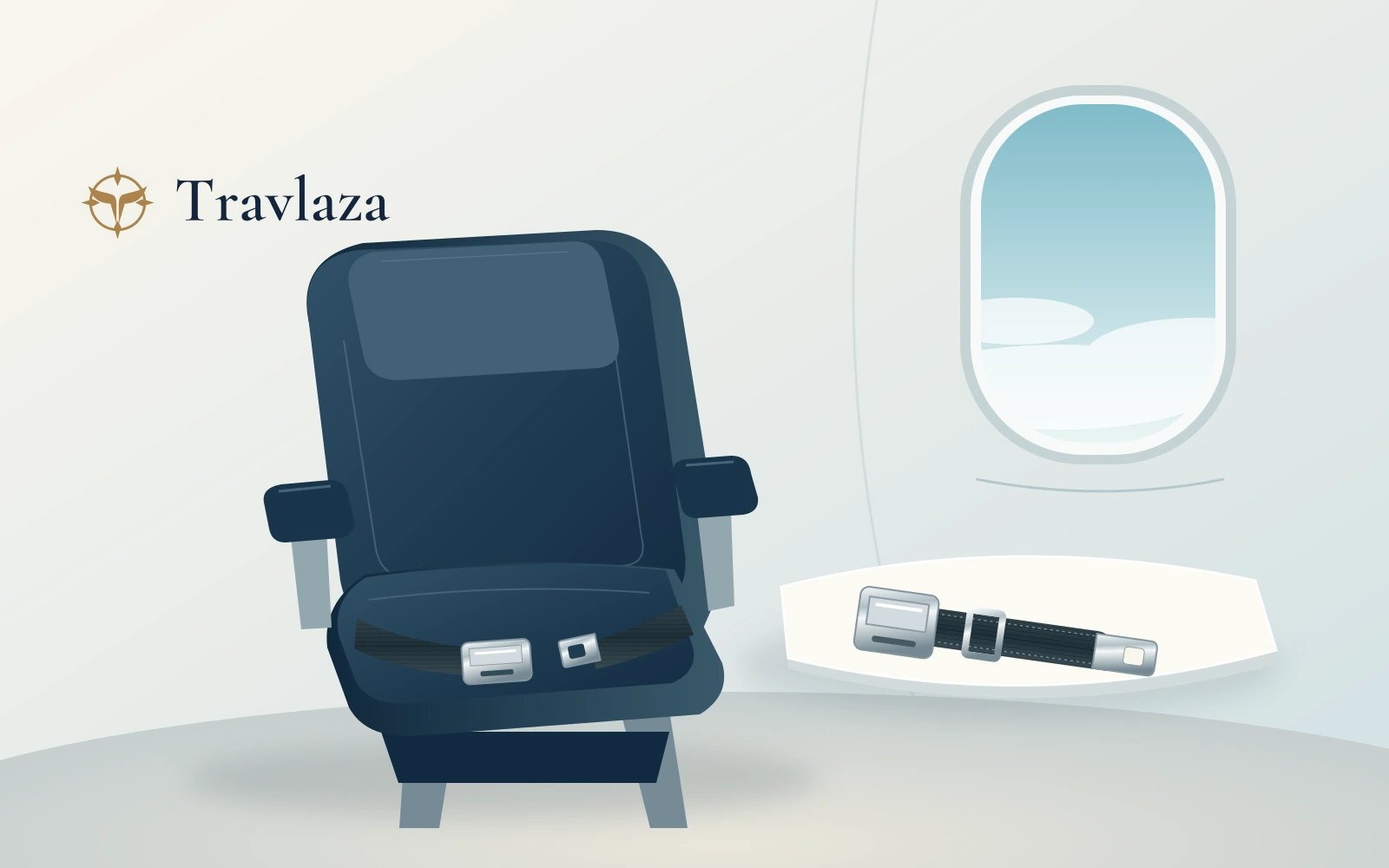
If the airplane seat belt is too short, ask the cabin crew for the operating airline’s approved seat belt extender. You can say, “Could I have a seat belt extender for my seat, please?” If you already expect to need one, contact the airline before travel to ask about its procedure and any seating restrictions. The equipment itself should come from the airline, following its instructions.
An extender adds length to the belt. It does not make the seat wider or provide more legroom. Keeping those questions separate makes the conversation simpler: you may need help fastening the belt, advice about the space between the armrests, or both. Explain the practical need so the airline can address the right issue.
A short request is enough
You do not need a long explanation to begin the conversation. At boarding, tell a cabin crew member that you need an extender and give your seat number. If you would prefer discretion, you can ask quietly at the aircraft entrance: “Could we speak briefly about a seat belt extender?”
If you only discover the problem after sitting down, ask a crew member then. Say whether the belt cannot reach or whether you are unsure how to use the equipment. Let the crew supply the appropriate item and explain its use. Avoid trying to solve the fit by borrowing another passenger’s equipment or adapting the belt yourself. The useful next step is to have the crew assess what you need at that seat.
Loganair gives a clear example of this process: passengers request an extender from the crew after boarding, and the crew provide one certified for the aircraft. That is Loganair’s stated procedure; it does not establish a guaranteed extender length or identical arrangements on every airline.
Can I bring an extender bought online?
Do not rely on a personal extender being accepted. Ask the operating airline for its own approved equipment. Loganair expressly prohibits personal extenders. The US FAA’s InFO 12012 advisory, published in July 2012, explains that privately marketed extenders, including products advertised as FAA approved, are not maintained under an airline’s approved maintenance programme. That advisory is not a new worldwide law, and a shop’s approval claim does not settle an airline’s acceptance decision.
Before travel, ask about your actual flights
Find the airline operating each flight, including connections and the return journey. Give that airline your flight details when asking about an extender. The name on the aircraft and the operator shown in the itinerary matter more for this question than which website sold the ticket. If different airlines operate different legs, make a separate enquiry for each operator instead of treating one reply as covering the whole journey.
A useful message is: “I expect to need a seat belt extender on flight [number] on [date]. What is your onboard request procedure, and are any seats unsuitable? I would also like to discuss seat space.” Leave out the final sentence if belt length is your only concern. This keeps the request specific without requiring you to describe yourself using a weight category or a label.
Ask the airline to distinguish what can be explained before departure from what the cabin crew will confirm on board. Loganair, for example, directs passengers with advance seating or comfort concerns to contact its support team before flying. An early conversation is especially useful when you are choosing a seat: discovering an incompatibility after boarding leaves less opportunity to discuss alternatives.
Once you know which operators can meet your needs, you can compare flights for your trip. Travlaza compares flights; booking, payment and ticket issuance take place with the airline or agency you choose. Questions about the extender and your seating arrangement belong with the operating airline.
Seat selection and belt length answer different questions
A seat map can help you choose a location in the cabin, but it does not confirm that a particular belt or extender will meet your needs. Nor should a label such as extra legroom be treated as a promise of more width. When discussing a seat, specify which dimension matters to you instead of using “more space” for several different concerns.
For example, a traveller might want an aisle seat for their preferred position and also need an extender. Those are two requests to discuss together, but choosing the aisle does not itself answer the equipment question. Another traveller might be comfortable with the belt but need to clarify the boundary between their seat and the neighbouring one. In that case, asking only for an extender would leave the main seating issue unresolved.
Our guide to choosing a flight seat can help with the position and seat-selection side of the decision. Use the airline’s answer about your physical seating needs alongside that choice, rather than expecting the seat-selection option to confirm safety equipment automatically.
Does needing an extender automatically mean I need another seat?
No universal rule follows from the extender request alone. Belt length and the room occupied in the seat are separate matters. Southwest, for example, uses the armrests as the boundary between seats and says passengers who encroach on a neighbouring seat may need adjacent seating. That is an airline-specific seat-space policy, not a rule that every passenger requesting an extender needs an extra seat. Ask your own operating airline about your actual seating needs.
Check exit-seat restrictions before choosing
Southwest allows one Southwest-provided extender per passenger and does not allow its use in an exit seat. If you are considering an exit seat on a Southwest flight, raise the extender requirement before settling on that location. Another carrier’s answer must come from that carrier; Southwest’s rule should not be presented as a universal rule for every flight.
Suppose, as a planning example, that you have selected an exit seat and later realise you will need an extender. Tell the airline about both facts and ask which seating arrangement is suitable. Do not assume the selected seat remains appropriate simply because it appears in your booking. Equally, avoid choosing an exit seat as a solution to a belt-length concern: more legroom does not settle the extender question.
Keep the reply useful for the day of travel
Save the airline’s response with your flight details. Note the request procedure, any seat restriction and whether you also discussed the space you need. If the flight or operating airline changes, revisit those points with the new operator. A previous successful trip is useful context to explain your request, but it is not confirmation for a different aircraft or airline.
More travel guides
Flying with skis: count the boot bag before booking
A practical way to measure, weigh and price skis or a snowboard together with a boot bag before buying your flights.
Flying with golf clubs: plan your checked bag before booking
Choose a suitable case, weigh the packed golf bag and compare both directions of the journey before paying for a flight.
Flying with fishing rods: carry-on or checked baggage?
Measure the packed rod case, choose cabin or checked carriage, and compare the full baggage cost. Delta and American show how the decision can change.