

Flying with skis: count the boot bag before booking
A practical way to measure, weigh and price skis or a snowboard together with a boot bag before buying your flights.
Language
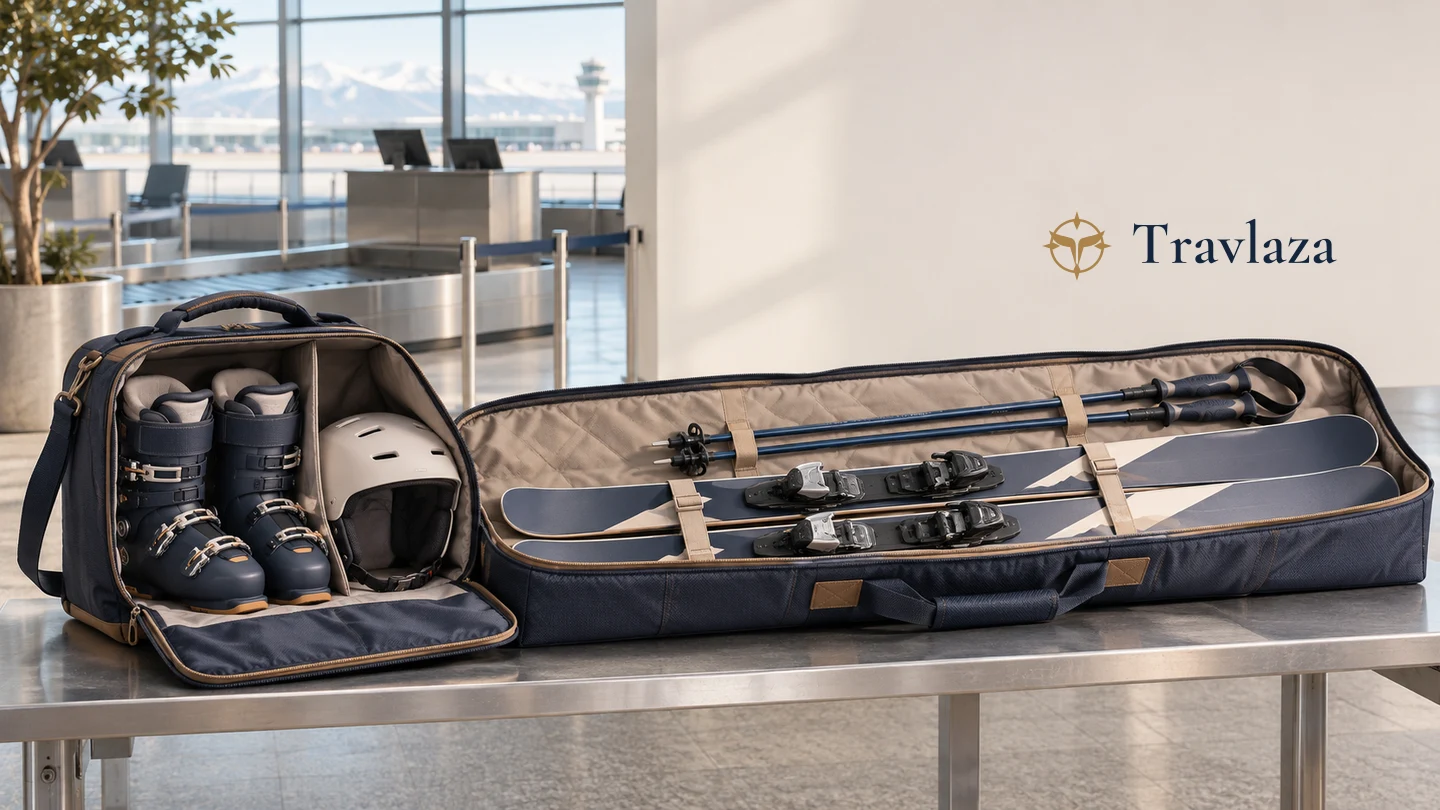
Flying with skis or a snowboard from the United States is easier to plan when you treat the long equipment bag and the boot bag as a complete set. Delta and American Airlines accept ski equipment as checked baggage, but their rules affect how the bags are counted and charged. Pack the actual equipment, weigh both bags and check every operating airline before choosing a ticket. A ski-bag exception does not automatically give you free baggage.
Make a packing record before comparing flights
Start with what you intend to take: a pair of skis and poles, or a snowboard, plus boots, bindings and any helmet. List the contents of each container separately. This makes a useful question for an airline: whether that combination qualifies for its ski-equipment rule. Asking only whether it carries skis leaves the boot bag, spare clothing and total weight unexplained. Keep your ordinary suitcase on a separate line so its allowance is included in the comparison.
Weigh the bags after you have added padding, straps and the accessories that will actually travel. Record each bag's weight and the combined total. Measure the outside length, width and height of each closed container, including parts that project beyond it. When a rule uses total dimensions, add those three measurements. For example, an invented case measuring 190 × 30 × 20 cm has total dimensions of 240 cm. Its length alone is 190 cm. Neither figure establishes that an airline will accept it on your flight.
Delta: check the container and combined weight
Delta's sporting-equipment guidance allows a ski-and-pole bag or a snowboard bag together with one boot bag per person. Its general sports rule requires a durable protective container designed specifically for the equipment. Check that the container is designed for your equipment before packing it.
Delta applies the usual baggage allowance and fees for the cabin and travel region. If the ski or snowboard bag and boot bag together weigh more than 50 lb, its applicable excess-weight charge applies. Equipment with outside length, width and height totaling more than 115 inches, or 292 cm, is not accepted under the published rule. A long bag may therefore be within the size limit while the combined weight still creates a charge. Ask for the price of the exact packed set under your fare rather than assuming the word ‘ski’ removes normal baggage costs.
American: one checked item depends on the contents
American Airlines describes one pair of skis with poles, or one snowboard, plus one equipment bag as one checked item under its ski rule. The listed equipment includes one pair of ski or snowboard boots and bindings, and one helmet. Standard checked-bag fees for your destination apply up to 50 lb or 23 kg; the eligible ski arrangement is exempt from oversize fees. The exemption is a charging rule, not permission to exceed the airline's acceptance limits.
American's general sports-equipment limit is 115 inches or 292 cm in total outside dimensions and 70 lb or 32 kg, subject to aircraft size and available cargo space. It also publishes a specific restriction for departures from Madrid: no single side of a checked item may exceed 43 inches or 110 cm. This can matter on a return journey even if the outward U.S. flight accepts your long bag. It is a restriction for departures from Madrid, not a rule for every flight from Spain or every airline.
American's contents condition deserves attention before you use empty space for clothes. If the equipment bag contains items outside its approved equipment, it is charged as an ordinary checked bag, and additional oversize or overweight charges may apply. Its ski guidance also says you cannot travel with lighters or torches used to apply ski wax. That statement does not mean every kind of wax is prohibited. Keep an uncertain maintenance accessory out of the packing plan until the airline has explained its actual conditions.
The two-bag calculation can change the price
With American, a combined weight above 50 lb or 23 kg means the skis or snowboard and equipment bag are charged as two separate items. Standard overweight fees apply above 50 lb or 23 kg up to 70 lb or 32 kg. A further condition concerns the equipment bag alone: if that bag exceeds both 50 lb or 23 kg and 62 inches or 158 cm in total dimensions, it is a separate checked bag with standard overweight and oversize charges.
Consider two hypothetical packing plans. A 15 kg long bag and 7 kg boot bag total 22 kg. Add another 3 kg to the long bag and the set totals 25 kg. Both individual bags can appear comfortably below a weight threshold while the combined set crosses it. Use the example to understand the calculation, not as a quote: the actual price depends on the carrier, fare, destination and other bags. Reweigh after any change to the contents, including changes made for the return.
Can I carry the boot bag into the cabin instead?
Ask whether the packed boot bag fits your actual cabin allowance, including its size, weight and permitted number of pieces. You may need to rearrange another cabin bag. The checked-equipment rule that pairs a boot bag with skis does not create an extra free cabin item. Decide where the boots will travel before comparing the checked-bag quote, then give the airline that precise arrangement.
Check the connection as well as the first flight
Write down the operating airline for every flight, including partner-operated services and the return. Send the relevant operator the bag dimensions, weights and contents and ask whether the equipment can travel on the actual aircraft. If your plan includes a connection, ask whether the bags will be tagged through or need collecting and checking in again. Record where collection takes place. An acceptance answer about one flight does not settle another operator's handling arrangements.
At the departure airport, establish where the long bag must be handed over and the applicable deadline. On arrival, ask where to collect it rather than assuming it will appear beside an ordinary suitcase. If you must move between airports or use ground transport, check whether the packed case fits the vehicle or service you intend to use. Use the airline's actual equipment drop-off deadline to plan when you need to reach the airport.
Compare the trip with the equipment included
Put the ticket price, actual baggage quote for both directions and any required additional bag beside each itinerary. Add practical costs you can confirm, such as suitable airport transport or a different container you actually need. Use the same packing plan for each offer. Our baggage allowance guide helps separate the number of pieces, weight and dimensions when a fare description is unclear.
More travel guides
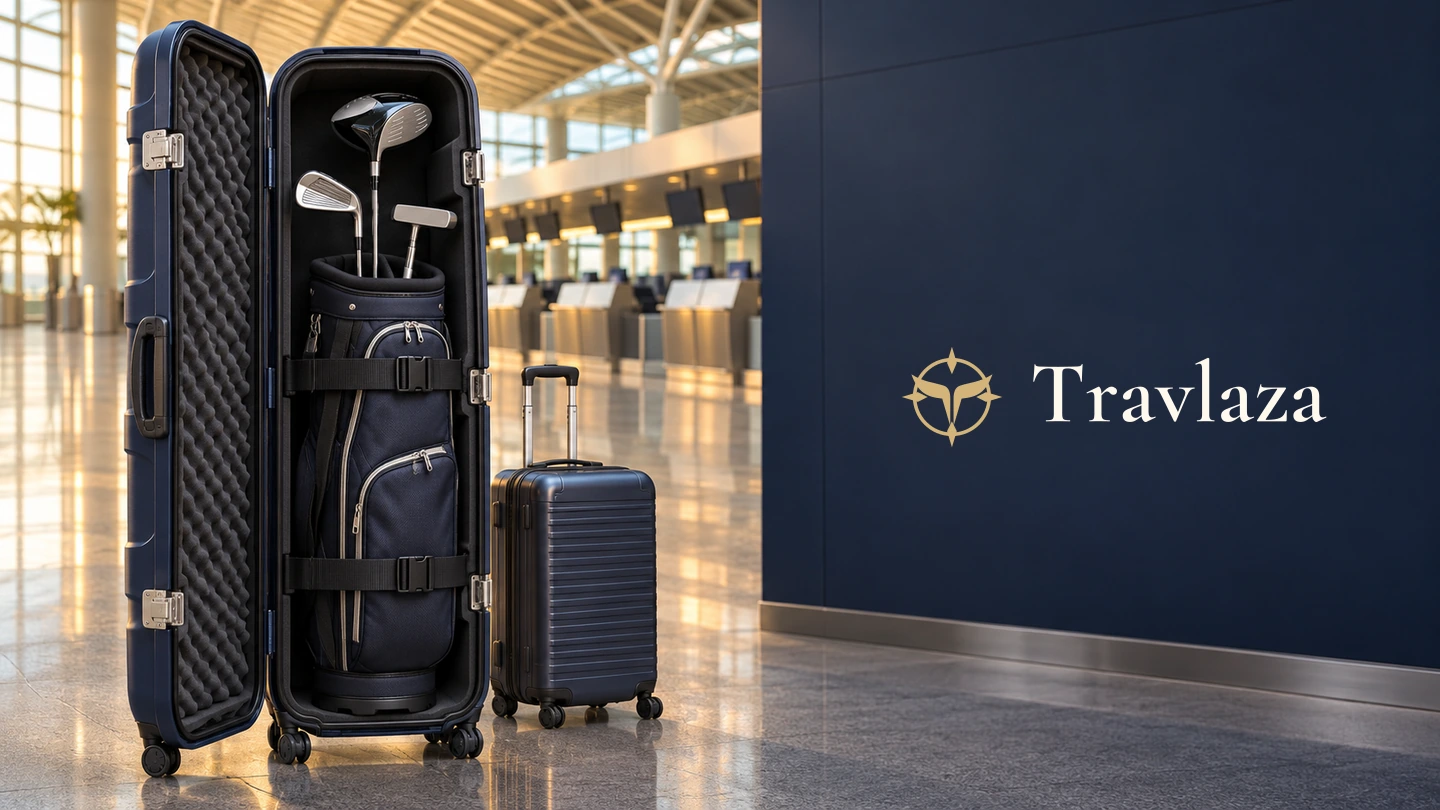
Flying with golf clubs: plan your checked bag before booking
Choose a suitable case, weigh the packed golf bag and compare both directions of the journey before paying for a flight.
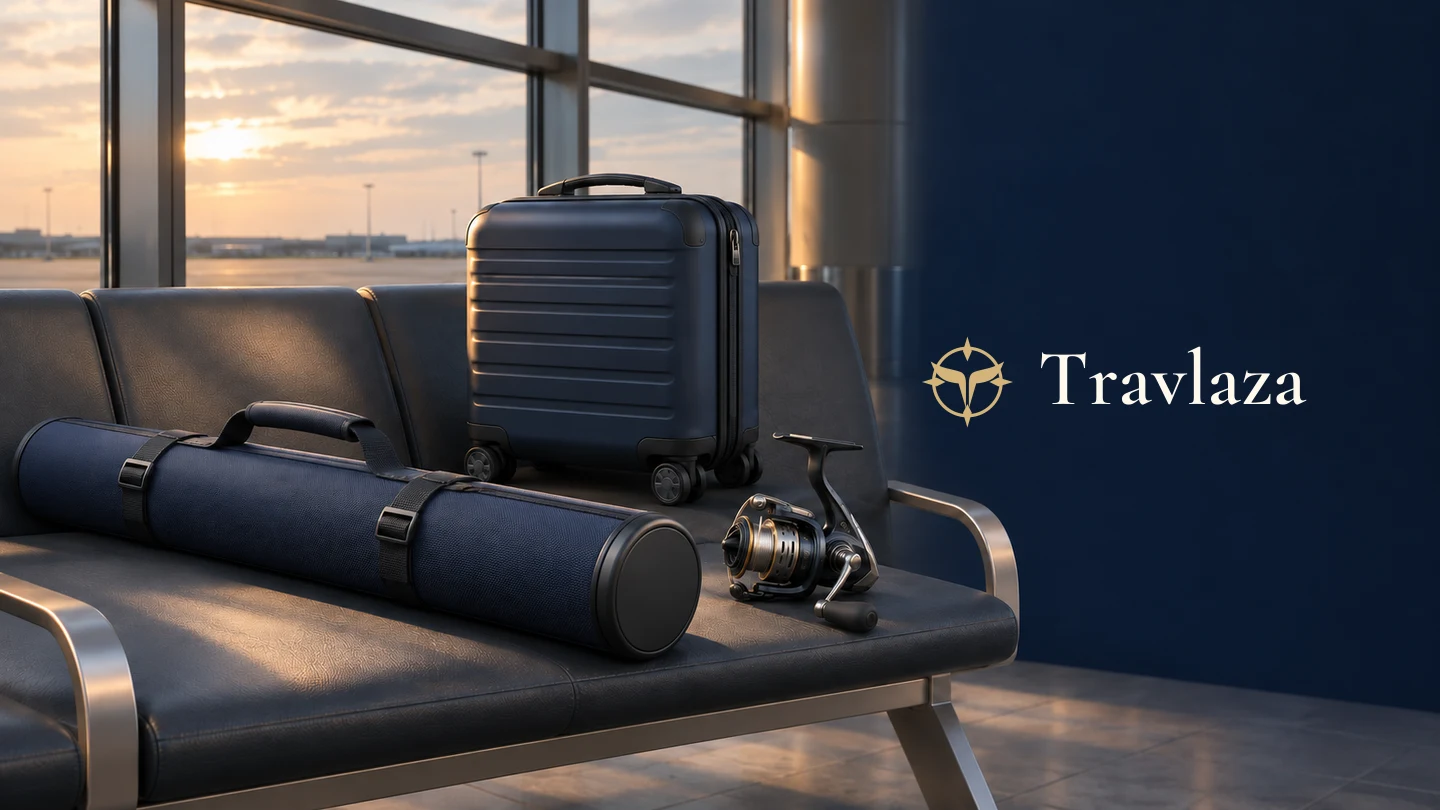
Flying with fishing rods: carry-on or checked baggage?
Measure the packed rod case, choose cabin or checked carriage, and compare the full baggage cost. Delta and American show how the decision can change.
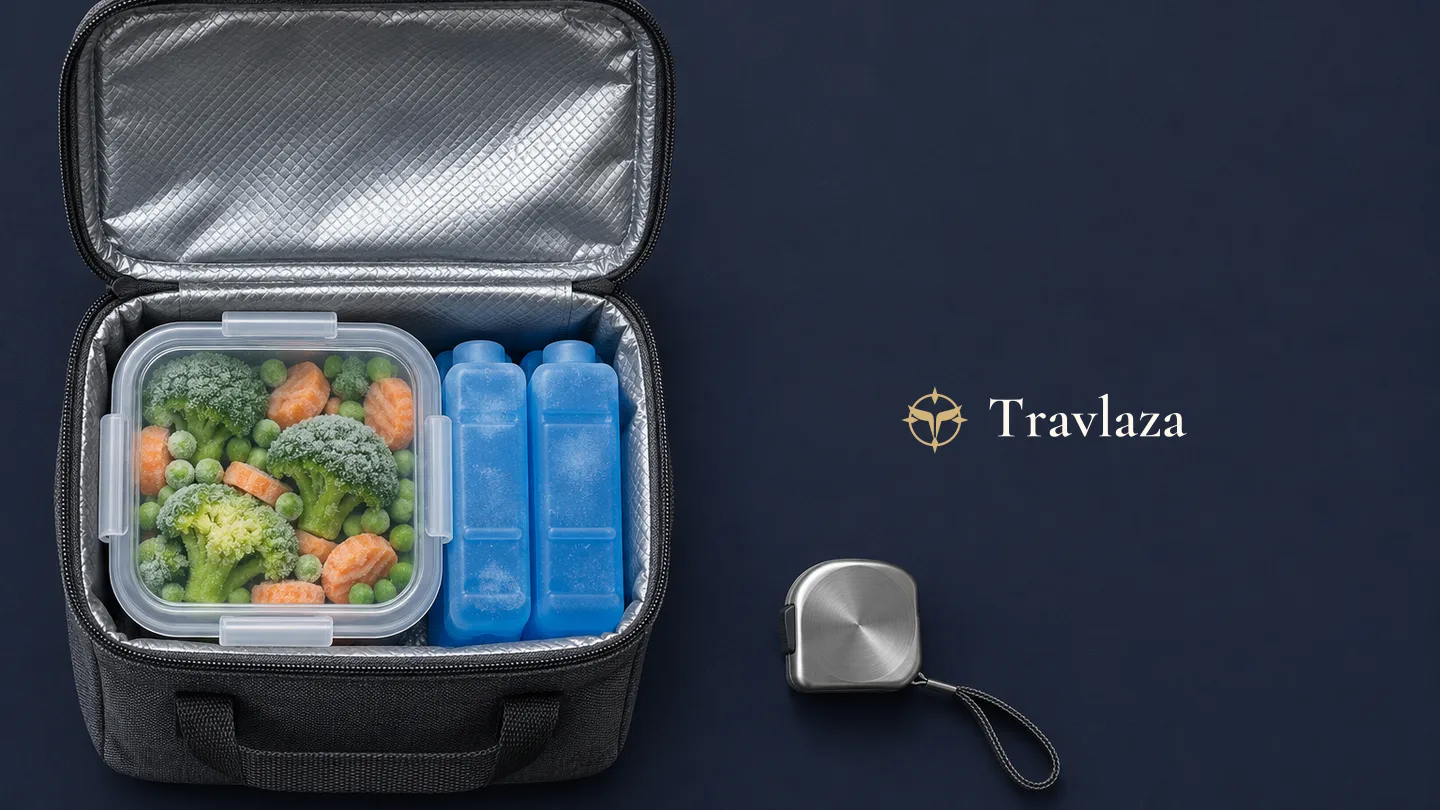
Flying with frozen food from a U.S. airport: gel packs or dry ice?
Plan which bag will hold your cooler before you book. The right choice depends on whether you can keep gel packs solid at screening or get the airline to approve dry ice.