

Flying with frozen food from a U.S. airport: gel packs or dry ice?
Plan which bag will hold your cooler before you book. The right choice depends on whether you can keep gel packs solid at screening or get the airline to approve dry ice.
Language
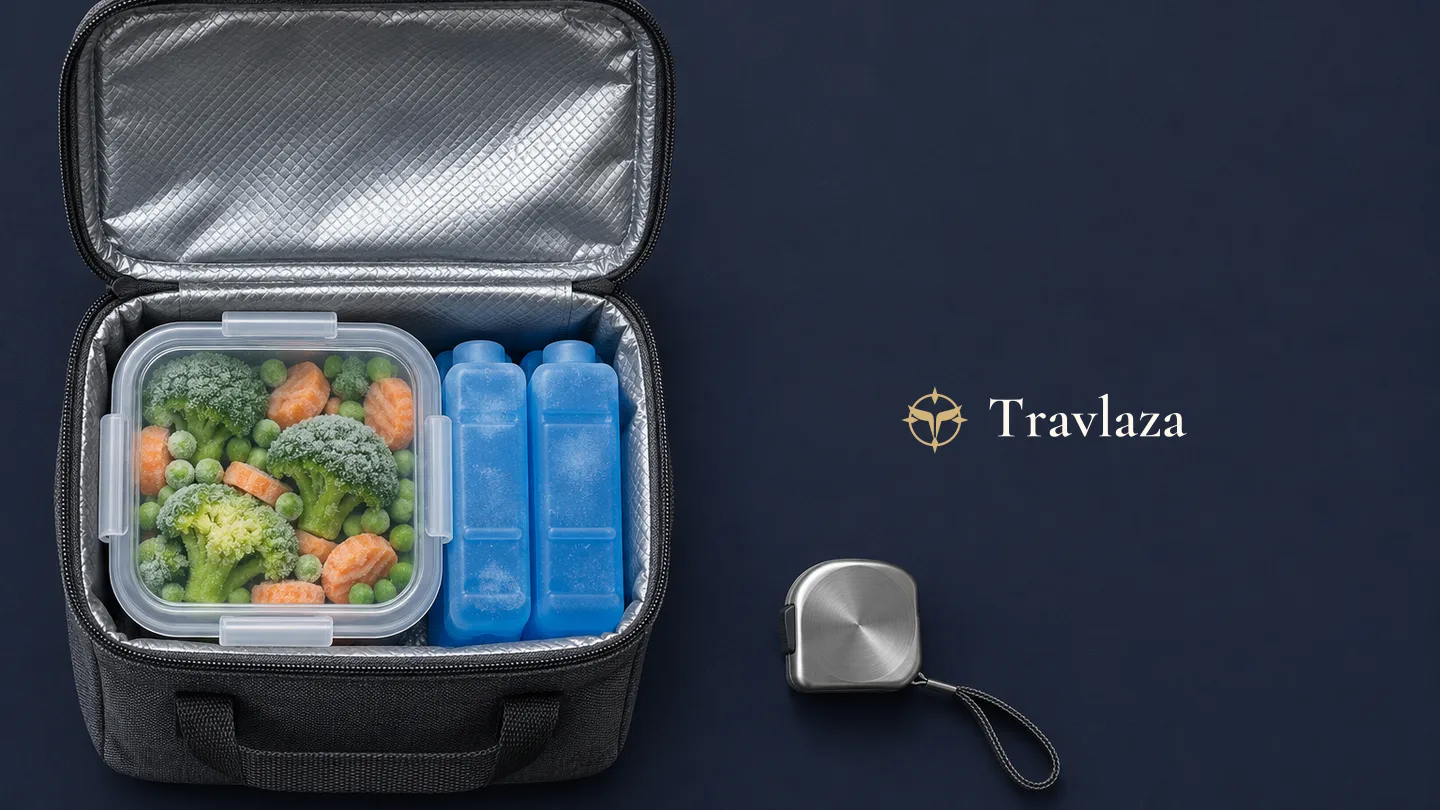
You can usually plan to fly with ordinary frozen food from a U.S. airport if your food, coolant and bag meet the rules for your trip. For a carry-on cooler, start with gel packs that will still be frozen solid at security. If you need dry ice, choose a flight and a bag that the operating airline will approve for it. Decide before you buy the ticket. A cooler that passes security can still be too large for the cabin, and a checked-bag allowance doesn't include automatic permission to pack dry ice.
Work backward from the next security checkpoint
Estimate how long the cooler will be out of the freezer before each checkpoint where you expect to take it through security. Count the drive, the early airport arrival and any wait before screening. On a connection that requires another screening, count the first flight and the transfer too. If your plan only works when the packs come straight out of the freezer, choose checked baggage if suitable, or look for a simpler flight.
At U.S. carry-on screening, a liquid or gel above 3.4 fluid ounces (100 mL) per container needs to be frozen solid. Ordinary liquids and gels have to meet the usual carry-on liquids rules. Consider the food as well as the packs. A container of frozen soup and a box of solid frozen vegetables can present different screening questions if the food has started to thaw. Keep the containers accessible in case an officer needs a closer look.
Does a gel pack count as frozen if the outside still feels hard?
Judge it by whether the contents are solid at screening. A frozen outer layer can hide liquid or slush in the middle. If you can't keep the whole pack solid until screening, ask whether you can take the cooler in checked baggage and pack for that option before you leave.
Ask about dry ice before choosing your fare
Under U.S. rules, the airline must approve dry ice used to pack eligible perishables. The limit is 5.5 pounds (2.5 kg) total per passenger. The FAA lists that limit per package as well. Splitting your food between two coolers doesn't double your allowance. The package must let carbon dioxide gas escape. For checked baggage, the package must be marked “Dry Ice” or “Carbon dioxide, solid” and show the net amount of dry ice or indicate that it is 5.5 pounds (2.5 kg) or less.
Check your operating airline's packaging instructions, which can add requirements. Delta describes a dry-ice option in either carry-on or checked baggage for nonhazardous perishables. Its published conditions include marking the package with the net dry-ice weight and identifying the contents. American Airlines describes how to take dry ice in the cabin. It calls for a vented hard plastic or heavy-gauge polystyrene foam container and asks passengers to tell a ticket or gate agent. If you need to check the cooler on American, ask the airline about that plan separately before relying on it.
When you contact the airline, describe the trip and the packed cooler in the same message. Include the operating airline and flight number for each leg, whether the cooler goes in the cabin or the hold, the package material and dimensions, what it contains, and the weight of the dry ice. Ask when and where the approval will be handled. If another airline operates the connection, check its rules before buying. Approval on the first leg doesn't settle the question for the next one.
Measure the cooler after packing it
Measure the outside on all three sides with the food and coolant inside and the lid closed. Include protruding handles or a bulging pocket. Weigh the loaded cooler. Check those measurements against the operating carrier's limits for the bag type you intend to use. Then check what that fare actually includes. An insulated bag you carry separately can take the place of another piece of cabin baggage, so work out where your usual carry-on items will go.
Plan for someone at the gate asking you to check the cooler, even if it fits the published cabin dimensions. Ask in advance if the operating airline can take that specific package into the hold and what you would need to do. A dry-ice package that was ready for the cabin may need checked baggage markings and acceptance before it can be handed over. If the airline can't take it and the food has to travel, book a fare and flight with an agreed checked option from the beginning.
Compare the whole trip, including the last leg on the ground
Say you're taking frozen vegetables from Chicago to Denver. One option is a nonstop flight whose fare includes the cabin bag your cooler fits. Another option has a connection, a smaller cabin allowance and a longer wait before you can reach a freezer. Compare the full ticket price with any bags added and map the elapsed time from your freezer at home to the freezer at your destination. For a checked cooler, include the time you expect to spend waiting at baggage claim and getting to your accommodation.
For a connection, find out whether the airline will transfer a checked cooler to the final airport or whether you will need to collect it and go through check-in again. With separate tickets, confirm the arrangements before assuming either airline will pass the bag to the other. A nonstop itinerary removes the transfer step and the risk tied to it. It doesn't give a precise guarantee for how long your food will stay frozen. If you can't arrange for someone to receive and store it promptly, consider getting the food at your destination.
More travel guides
Flying with skis: count the boot bag before booking
A practical way to measure, weigh and price skis or a snowboard together with a boot bag before buying your flights.
Flying with golf clubs: plan your checked bag before booking
Choose a suitable case, weigh the packed golf bag and compare both directions of the journey before paying for a flight.
Flying with fishing rods: carry-on or checked baggage?
Measure the packed rod case, choose cabin or checked carriage, and compare the full baggage cost. Delta and American show how the decision can change.