

Delayed or damaged baggage: how to report it and claim costs
Report the bag promptly, then match each expense, loss or damage claim with its evidence. Keep the tracing report and financial request separate.
Language
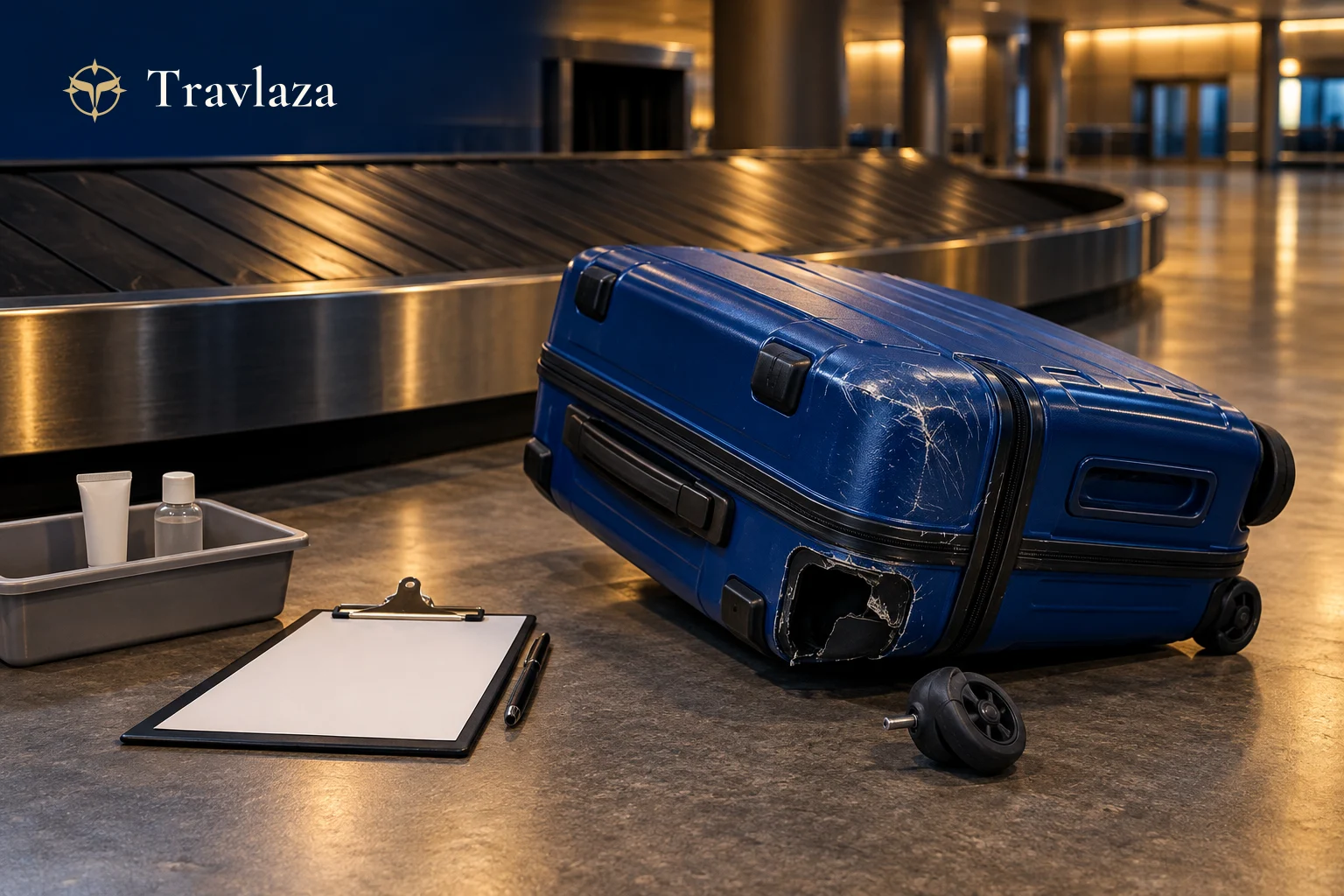
If your checked bag is missing or damaged, report it to the airline promptly and keep the incident reference. Then send a documented claim for the expenses, damage or loss you want assessed. The tracing report and the financial claim do different jobs: one helps locate the bag; the other explains what you are asking the airline to pay for.
Report the problem before leaving baggage reclaim
Go to the airline’s baggage service desk or its handling representative with your baggage tag and flight details. Describe the missing bag or the damage, ask for a copy of the incident report, often called a Property Irregularity Report or PIR, and confirm the official follow-up channel. If several airlines carried you, give the whole itinerary. The final airline is a useful starting point, but it is not always the only party against which a claim can be made.
Is a PIR enough to receive compensation?
No. It records the incident and supports tracing, but it does not guarantee acceptance or payment. Ask where to send the written financial claim and keep proof that the airline received it.
Keep evidence for each part of the claim
- Keep the bag tag, itinerary, boarding evidence, incident report and correspondence together. Record when the bag should have arrived and when you actually received it.
- For damage, take overall and close-up photographs. Ask what assessment or repair estimate the airline needs before repairing or discarding the case.
- For purchases, keep dated, itemised receipts and evidence of the amount paid. Redact unnecessary banking information before sending documents.
- If the bag is declared lost, list its contents, age, value and available proof separately from temporary purchases.
Give the baggage team the delivery address and contact arrangements you can actually use. If your plans change, update them through the official channel and retain the message; an old hotel address may no longer be suitable.
Separate temporary expenses, loss and damage
While a bag is delayed, record the toiletries or clothing you needed to buy and why. Consider what you already have available, particularly if you are returning home. Under US DOT guidance, airlines must compensate reasonable, verifiable and actual incidental expenses caused by delayed bags, subject to the applicable liability limits, and cannot impose an arbitrary daily cap. This is not a fixed daily payment or an unlimited replacement budget.
For a lost bag, the airline assesses the documented loss. The age and value of the contents and depreciation can affect that assessment. A published liability ceiling is not a lump sum automatically due to every passenger, so keep the inventory and purchase evidence rather than claiming the maximum alone.
For damage, describe the affected part and the remedy you want assessed, such as repair or reimbursement. DOT guidance distinguishes damage incurred while baggage is in the airline’s control from pre-existing damage, improper packing and ordinary wear; wheels, handles and straps are not excluded merely because they are those components. Where the Montreal Convention applies, the carrier is not liable to the extent damage resulted from an inherent defect, quality or vice of the baggage. The cause of the particular damage still matters.
Use the right written-complaint deadline
Report the incident promptly. Where the Montreal Convention applies, a written complaint about damaged checked baggage must be made promptly after discovery and no later than seven days from receipt. A written complaint about delay must be made no later than 21 days from the date the baggage was placed at your disposal. Keep proof of submission and the date used to calculate the deadline.
Must I wait 21 days before reporting a missing bag?
No. Report it promptly. The Montreal delay-complaint period runs from baggage availability. A separate rule allows you to enforce rights arising from the carriage contract if the carrier admits the checked bag is lost or it has not arrived 21 days after it should have arrived. Do not confuse these two clocks or apply them to every domestic journey.
Check which rules govern your itinerary and the airline’s claim instructions. Keep insurance notification and legal-action deadlines separate: a baggage-complaint period is not a universal time limit for bringing a legal case.
Ask separately about a US checked-bag fee refund
If you paid to check the bag, the fee is separate from incidental expenses or lost contents. Under DOT rules, a lost or significantly delayed bag can qualify for a fee refund. For a significant delay, a mishandled-baggage report must be on file; once the relevant threshold is met, the refund should be issued automatically, subject to the exceptions below.
- Domestic flight: 12 hours after the flight arrives.
- International flight between the US and another country lasting 12 hours or less: 15 hours after arrival.
- That international flight lasting more than 12 hours: 30 hours after arrival.
The delay clock ends when you collect the bag at the arrival airport or it is delivered to the location agreed with the airline. These thresholds concern the US fee refund, not worldwide expense allowances or the Montreal written-complaint deadlines.
The significant-delay exceptions include a delay caused by your failure to collect and recheck the bag at the first international entry point to the US, or to collect a bag that arrived on time at your ticketed final destination. Another exception concerns voluntarily agreeing, because of late check-in or standby travel, to separate baggage transport with a new delivery date and location. In these situations, the airline must not require you to waive a lost-bag fee refund, or reimbursement of incidental expenses beyond the agreed delivery date or arising from loss, damage or pilferage.
Send a claim the airline can assess
Give the incident reference, itinerary and a short timeline. Identify temporary expenses, repair, loss compensation and any baggage-fee refund separately, with supporting evidence for each. Retain the submission confirmation. For example, if a bag arrives two days late and you bought essential toiletries while waiting, record the delivery date and the documented necessary purchase; that is different from claiming a permanently lost suitcase.
If an item is refused, ask for a written explanation and compare it with the evidence you sent. Keep follow-up messages in the same case where possible. If you also claim on insurance, check its separate terms and notification requirements, disclose other payments and avoid claiming the same expense twice. Keep booking codes, addresses and payment details out of public complaints.
For a future trip, compare the fare and checked-bag charges together. The baggage allowance guide explains what a fare includes; that booking decision is separate from the claim for this trip.
More travel guides
Flying with skis: count the boot bag before booking
A practical way to measure, weigh and price skis or a snowboard together with a boot bag before buying your flights.

Flying with golf clubs: plan your checked bag before booking
Choose a suitable case, weigh the packed golf bag and compare both directions of the journey before paying for a flight.

Flying with fishing rods: carry-on or checked baggage?
Measure the packed rod case, choose cabin or checked carriage, and compare the full baggage cost. Delta and American show how the decision can change.