

Flying with a CPAP: taking it aboard and using it
Taking your CPAP on a flight and running it during the journey are different questions. Resolve both before choosing your itinerary.
Language
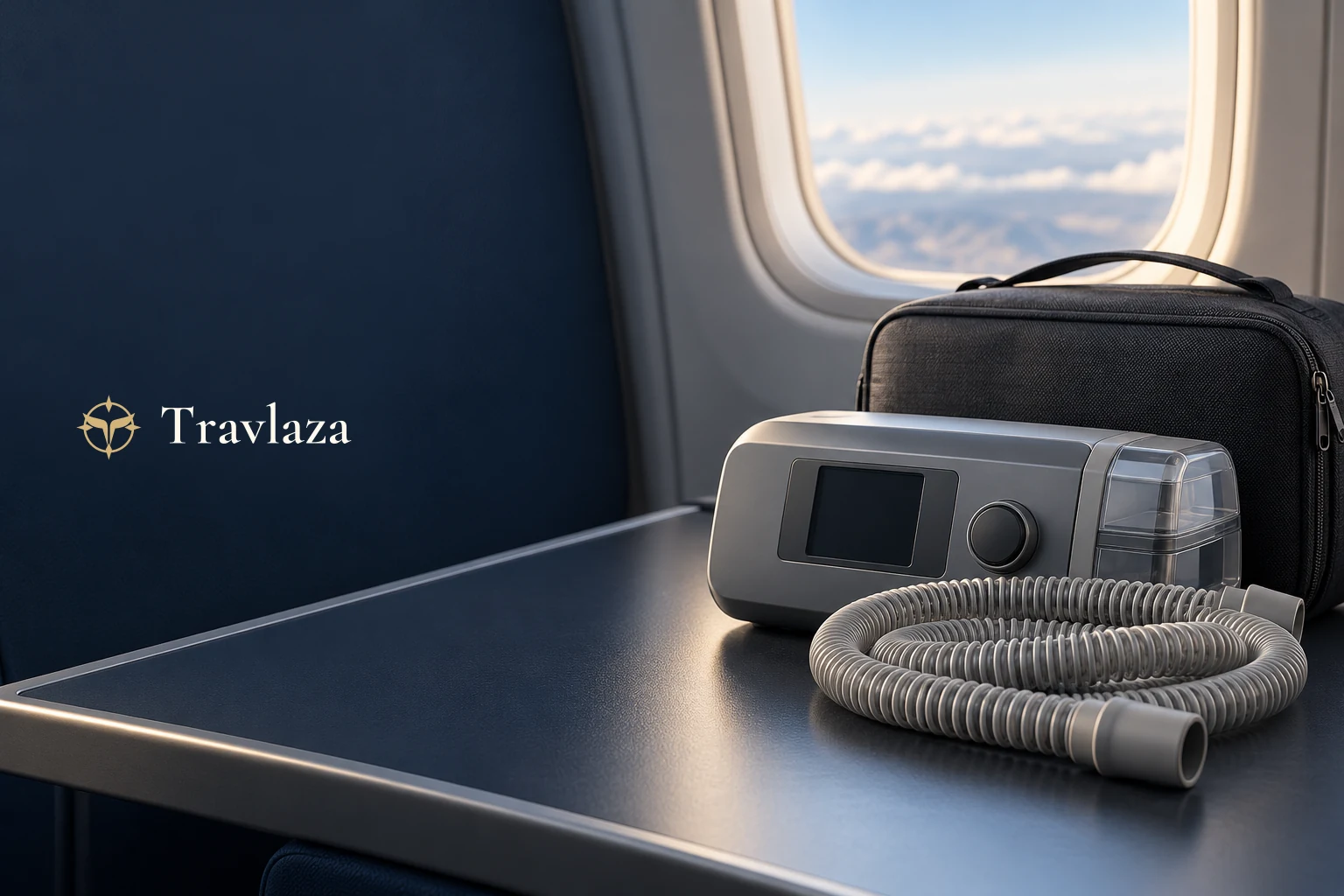
You can often fly with a continuous positive airway pressure (CPAP) machine, but permission to carry it does not settle whether you can use it in flight. Before booking, establish three things with each operating airline: where you can carry it, when you may run it and how you will power it.
Ask about the actual device and every flight
Find the airline operating each leg, including connections and the return journey—not just the name selling the ticket. Send its assistance team your CPAP make and model, dimensions, battery type and watt-hour (Wh) rating, and say whether you need to use it during the flight. Ask about advance notice, documents, when you may use it and where the machine and hose must fit or be stowed. Keep the response with your travel documents.
A manufacturer's air-travel compliance letter helps identify a device; it is not the same as an airline confirming arrangements for your itinerary. If you also need help moving through the airport, use the guide to requesting airport assistance; that request does not replace the CPAP enquiry.
Carrying the machine is not the same as using it
UK airport guidance allows CPAP medical equipment in hand or hold luggage and says medical equipment is screened separately. That describes UK security arrangements, not a worldwide baggage entitlement or permission to switch the machine on.
Does a CPAP count towards my cabin-baggage allowance?
Check your operating airline's medical-equipment rule. British Airways, for example, permits a CPAP as an extra cabin item without charge. Its CPAP guidance says medical clearance is not needed to carry or use it for sleep apnoea on its aircraft, but recommends a medical professional's letter. Do not assume a partner airline uses the same procedure or allowance.
Make a power plan before choosing the flight
Give the airline the device's power requirements and the details of each proposed battery, then confirm the permitted capacity, quantity, packing and any approval needed. Check compatibility with the manufacturer or equipment supplier. A medical-equipment allowance does not cancel battery restrictions.
Can I rely on a power socket at my seat?
No. BA says authorised medical equipment must be able to work from a battery because onboard power is not guaranteed. Its CPAP guidance recommends battery backup and calls for a DC adapter where seat power is installed. Confirm the arrangement for your exact device and flight rather than relying on a seat map or an advertised socket.
Ask when operation is permitted, too. BA's general authorised-medical-equipment rule excludes taxi, take-off, approach and landing; follow the applicable operator and crew instructions. If you need treatment while travelling, agree a workable plan with your clinician rather than deciding from an airline's equipment policy alone.
For example, an overnight flight plus a connection needs a plan for both sectors and the waiting time—not simply a battery estimate for the first flight. Ask your equipment supplier about runtime for the intended configuration and the operator about the reserve it requires.
Pack for the journey you have confirmed
Use your exact model's instructions for its case, tubing, adapters, batteries and humidifier. ResMed's travel guidance, for example, says to empty the water tub before detaching and packing it and not to use the water humidifier on the aircraft. Apply the instructions for your own model; different humidification systems are not interchangeable.
Under BA's lithium-battery rules, spare batteries belong in the cabin with terminals protected against short circuit. If your cabin bag is taken for the hold at the gate, remove those spares first. Confirm your own carrier's requirements and keep the device instructions and any approvals accessible, including for the return flight.
Does American Airlines count a CPAP towards my carry-on limit?
American Airlines lists CPAP machines among assistive devices that do not count towards its carry-on limits. Its guidance also says a device may need to be checked if space is limited, it does not fit in the cabin or it is not needed during the flight. If you need your CPAP in flight, confirm that need, its dimensions and the stowage arrangement with American before choosing the flight. This baggage rule does not itself confirm permission to operate your model, battery acceptance or guaranteed seat power; check those separately with each operating airline.
More travel guides
Flying with skis: count the boot bag before booking
A practical way to measure, weigh and price skis or a snowboard together with a boot bag before buying your flights.
Flying with golf clubs: plan your checked bag before booking
Choose a suitable case, weigh the packed golf bag and compare both directions of the journey before paying for a flight.
Flying with fishing rods: carry-on or checked baggage?
Measure the packed rod case, choose cabin or checked carriage, and compare the full baggage cost. Delta and American show how the decision can change.