

Gate-checking a stroller on a connecting flight in the US
Find out where to hand over your stroller, where to pick it up on each leg, and how to choose a connection that works even if the stroller goes straight to baggage claim.
Language
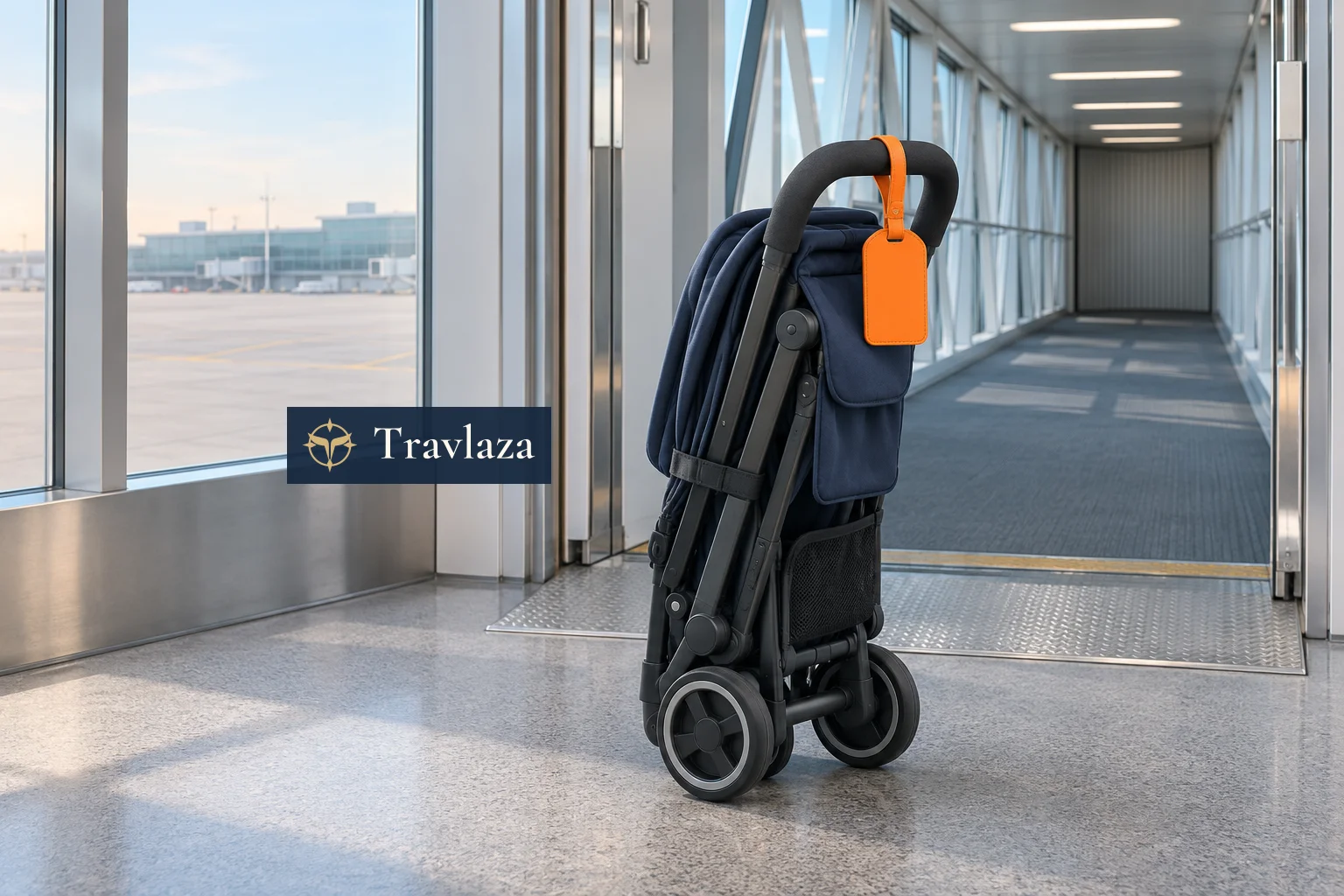
Before booking a US domestic connection, decide whether you need your stroller between flights. If you do, ask the airline operating the first leg whether you can request pickup at the connecting airport and where staff would hand it back. Checking a stroller at the gate tells you where it leaves your hands. It can still go to the baggage belt at your final airport. If the airline can confirm only the handoff at departure, compare the connection as if you will have to walk between gates without the stroller.
Compare the flights with the stroller out of your hands
Start with the hardest part of the journey for your family. A preschooler who can walk to a nearby gate may still need help after a delayed evening arrival. A solo parent with a toddler and two cabin bags may need both hands even if the transfer looks short on the map. The itinerary that works when everyone is rested may be a poor fit if the first flight arrives late and you have to move straight to the next gate.
Suppose you are comparing a nonstop from Denver to Orlando with a cheaper trip via Dallas. If the stroller is for the theme parks after arrival, picking it up at Orlando baggage claim may be fine on either itinerary. If it is how you move your child and bags through the airport, compare the nonstop against the connection with an extra condition: could you make the Dallas transfer if you do not see the stroller there? A slightly longer layover is worth considering if it gives your family a workable route to the next gate. It cannot guarantee that you will receive the stroller in Dallas.
Make this comparison in both directions. If the outbound trip is nonstop and the return has two legs, the simplest plan for the outbound does not settle the return. Look for who operates each flight on the offer. If the operating carrier changes midway, check both airlines' instructions. An answer about the flight into your connecting airport covers that flight. Ask the onward carrier separately where you would hand the stroller over if it does come back at the connection.
Ask two questions about each flight
Ask where staff will accept your exact stroller, then ask where staff expect to return it. For the first question, describe whether it folds, how large it is when folded and whether it is a single or double stroller. A stroller that the airline wants at the ticket counter cannot be the device you rely on to get through the terminal. If the gate is available as a handoff point, ask whether to visit the desk before boarding starts and where to leave the folded stroller once it has been tagged.
For the second question, name the airport and leg that matter to you. “Can I gate-check it?” is an easy question for an agent to answer with yes or no, but it leaves the return unresolved. Try “We change planes in Baltimore. Can you request that we get this stroller at the aircraft door in Baltimore? If that isn't available, which airport and pickup area should we expect?” At your final stop, ask whether the stroller goes to the regular carousel or whether you should look for a separate oversize pickup area.
If I check the stroller before security, can I assume I will get it back during the layover?
Ask the airline where the stroller will be tagged and handed back. If you need it during the connection, make that request before handing it over. Plan for the transfer without it until the carrier has explained what is available for your flights.
Read each airline's rule for what it actually answers
Southwest says the default for gate-checked strollers is baggage claim at the final destination. If you want to request return at the jet bridge at the connecting or final airport, tell the agent when you check it. Use the request to find out the plan and where to wait. Have a backup in case that handback is unavailable.
Delta says strollers can be checked at the gate or before security. Its page about children's items gives you the drop-off options. For your connection, ask the operating team to explain the expected return location and what to do after landing.
American's passenger guidance describes getting an eligible gate-checked stroller back at the gate after the flight. Its separate stroller policy sets restrictions on which items can be checked at the gate. Ask whether your specific stroller qualifies and confirm the return instructions for the leg you are about to fly. A family with a larger stroller may have a different drop-off plan from a family on the same flight using a compact folding one.
At the gate, keep the tag and repeat the pickup plan
Have the first and onward flight numbers ready when you speak to the agent. Remove loose items from the stroller, follow the carrier's folding and packing instructions and keep snacks, diapers and anything you will need in the terminal in an accessible bag. When the stroller is tagged, keep your claim stub and ask the agent to explain the airport code and pickup instructions if they are unclear. Tell the agent which connection you are trying to make and ask what you should do if the stroller does not appear where expected.
A stroller sent through to the final airport can free up your hands at the connection if you already have a comfortable way to move with your child. If you requested delivery at the arriving gate, follow staff directions on where you may wait. Check the onward gate and boarding time as soon as you can. If time is getting tight, tell an airline employee you are connecting and ask where to get help tracing the stroller before waiting in a spot staff have not designated.
What should I do if the stroller is missing when I reach the pickup point?
At a gate, show your claim stub to airline staff and ask them to confirm whether it went to another pickup point or continued to the final airport. At baggage claim, check the airline's designated pickup area and ask its baggage service desk to trace the tag. Keep any report number and the contact instructions the airline gives you.
Take a backup you can use during the transfer
Work out how you would get from the arrival gate to the next one with the people and bags you actually have. Split cabin items between adults where possible, keep one hand free and carry only the items you expect to need during the transfer. A child carrier that you already use comfortably can be an option if it is appropriate for your child and you can manage it with your luggage. If none of those arrangements works, a nonstop or a different departure with a less demanding connection may be worth paying more for.
More travel guides
Flying with skis: count the boot bag before booking
A practical way to measure, weigh and price skis or a snowboard together with a boot bag before buying your flights.
Flying with golf clubs: plan your checked bag before booking
Choose a suitable case, weigh the packed golf bag and compare both directions of the journey before paying for a flight.
Flying with fishing rods: carry-on or checked baggage?
Measure the packed rod case, choose cabin or checked carriage, and compare the full baggage cost. Delta and American show how the decision can change.