

Airline lost property: where to report a forgotten item
Left something onboard or in a terminal? Choose the right reporting route and prepare for collection or return.
Language
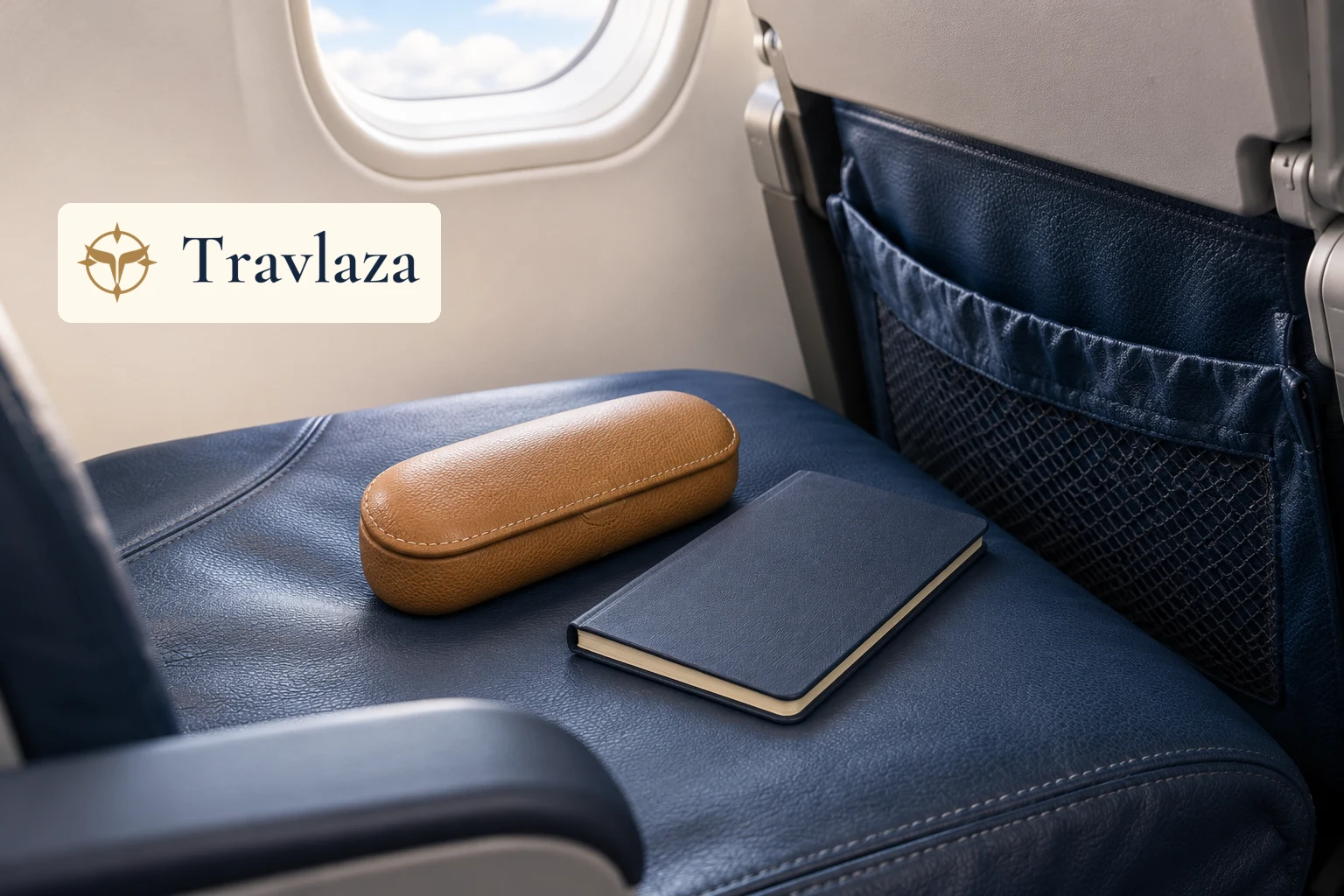
If you left something on a plane, start with the operating airline’s lost-property instructions; if you left it in the terminal, use that airport’s terminal-property service. The right contact depends on where the item was left, which airline actually flew the aircraft, and whether you are still at the airport. Reporting the loss and arranging the item’s return are separate steps.
A checked suitcase that never reaches the baggage belt belongs on a different reporting route. Use our guide to missing or damaged checked baggage for that problem. A glasses case forgotten in a seat pocket is a lost-property enquiry, even though you carried it as cabin baggage.
First, reconstruct the last place you used it
Write down the last place you remember holding the object, rather than only where you noticed it was missing. Suppose you flew from the United States, used a notebook onboard, and discovered the loss at your hotel abroad. Your hotel location does not make it a local terminal loss. The flight, arrival airport and likely seat location are the useful starting details.
If you used the object again after landing, the search changes. A notebook last seen at a terminal seating area needs the airport’s instructions for that location. When you genuinely cannot tell, describe both possibilities and ask which team handles each. Keep uncertainty visible in your report; presenting a guess as a definite seat location can send the enquiry in the wrong direction.
If you are still at the airport, contact the relevant airline or airport team there. Explain whether you are reporting an onboard or terminal loss before giving the description. If you have already left, follow the official online reporting or contact instructions. A lost-property report does not itself give you permission to go back through security or board the aircraft.
Why the operating airline matters
The airline that sold the ticket and the airline that operated the flight may differ. Look for the operator shown for the particular flight where you think the item remained. On a connecting journey, identify that flight separately: the airline on your final boarding pass may have nothing to do with an object left on the previous aircraft.
British Airways illustrates why searching only for a central airline desk can be unhelpful. BA says found onboard items are handed to the property team at the arrival airport, usually a handling agent. It has no central BA lost-property team. Use BA’s current arrival-airport guidance to find the appropriate contact rather than treating every airport’s terminal office as the onboard collection point.
Emirates uses a different route. While you are at the airport, speak to a member of the Emirates team. After you have left, consult its lost-property form instructions and establish whether your flight and ticket meet the eligibility conditions before starting the report.
My ticket starts with 176, but another airline flew the aircraft. Can I use the Emirates form?
No. The published form conditions require both an Emirates-operated aircraft and a ticket beginning with 176. For an item left on another operator’s aircraft, Emirates directs you to that airline. Use the operator for the flight involved, rather than the ticket prefix alone.
Prepare a description that helps identify your item
A useful report connects one object with one plausible place and time. Prepare the flight number, flight date, arrival airport and seat number if relevant. For a terminal loss, add the terminal and the most precise location you remember. If your journey crosses midnight, use the date shown for the particular flight and explain when you last saw the object instead of giving only the date you arrived home.
Describe the item’s type, color, brand if known, size and distinctive features. “Black glasses case with a worn corner and a blue cleaning cloth” is more useful than “personal belongings.” Mention a notebook’s cover and a recognizable feature without publishing the contents. If several objects were together, explain the relationship: for example, the notebook was inside a sleeve with the glasses case beside it.
Give identifying details privately through the official service and provide the contact information it requests. Keep a copy of what you sent and any reference issued, so you can quote it in follow-up messages. You do not need to post a full booking reference, passport number or detailed ownership evidence publicly, and these details should not be sent to Travlaza.
A report is not yet a confirmed match
Treat the process as three decisions: submit an accurate report, establish whether a found object is yours, and agree how it can be returned. An acknowledgment may only confirm that the enquiry was received. Before arranging collection, ask whether the service has actually identified a matching item or still needs more information. That distinction matters if you are already back in the United States and considering an international shipment.
Dubai Airports describes an online reporting route for cabin or airport belongings and directs missing checked bags to airlines. Follow the current official instructions for your situation; the existence of a reporting page does not establish that a submission has succeeded. If you cannot complete the process, use the assistance or contact route shown by that service and keep a note of what happened.
Nothing appears in the database today. Should I wait before reporting it?
Report through the appropriate channel without waiting for a database listing. Gatwick says terminal found items can take 24–48 hours to appear in its database and are kept for up to three months. Those are Gatwick terminal-service details, not worldwide reporting deadlines, response promises or rules for items left onboard.
Agree collection or shipment before making the trip
Ask the service what evidence it needs to release the item, where collection takes place, and whether an appointment or another arrangement is necessary. If someone might collect it for you, ask what permission and identification that service accepts. Do not send a friend to an airport with only a screenshot and the assumption that collection is allowed.
Charges can affect the choice. BA warns that reclaim, storage or postal charges may apply, and Gatwick describes a reclaim fee. Ask the actual service for its current charges and available return methods. Obtain the total relevant cost and the shipping details before paying; a possible postal option does not mean every item can be shipped to every destination for a fixed price.
In a hypothetical return to the United States, you might discover that the object is still at the arrival airport abroad. First establish the match, then ask about shipment to your address or an authorized collection arrangement. Keep the agreed details together. Buying another flight is not the first step in recovering a forgotten object, and a submitted report does not guarantee recovery or compensation.
More travel guides
Flying with skis: count the boot bag before booking
A practical way to measure, weigh and price skis or a snowboard together with a boot bag before buying your flights.

Flying with golf clubs: plan your checked bag before booking
Choose a suitable case, weigh the packed golf bag and compare both directions of the journey before paying for a flight.

Flying with fishing rods: carry-on or checked baggage?
Measure the packed rod case, choose cabin or checked carriage, and compare the full baggage cost. Delta and American show how the decision can change.