

Involuntary downgrade: what refund can you request?
Identify the downgraded flight, keep proof of both cabins and request the refund that fits your route and decision to travel.
Language
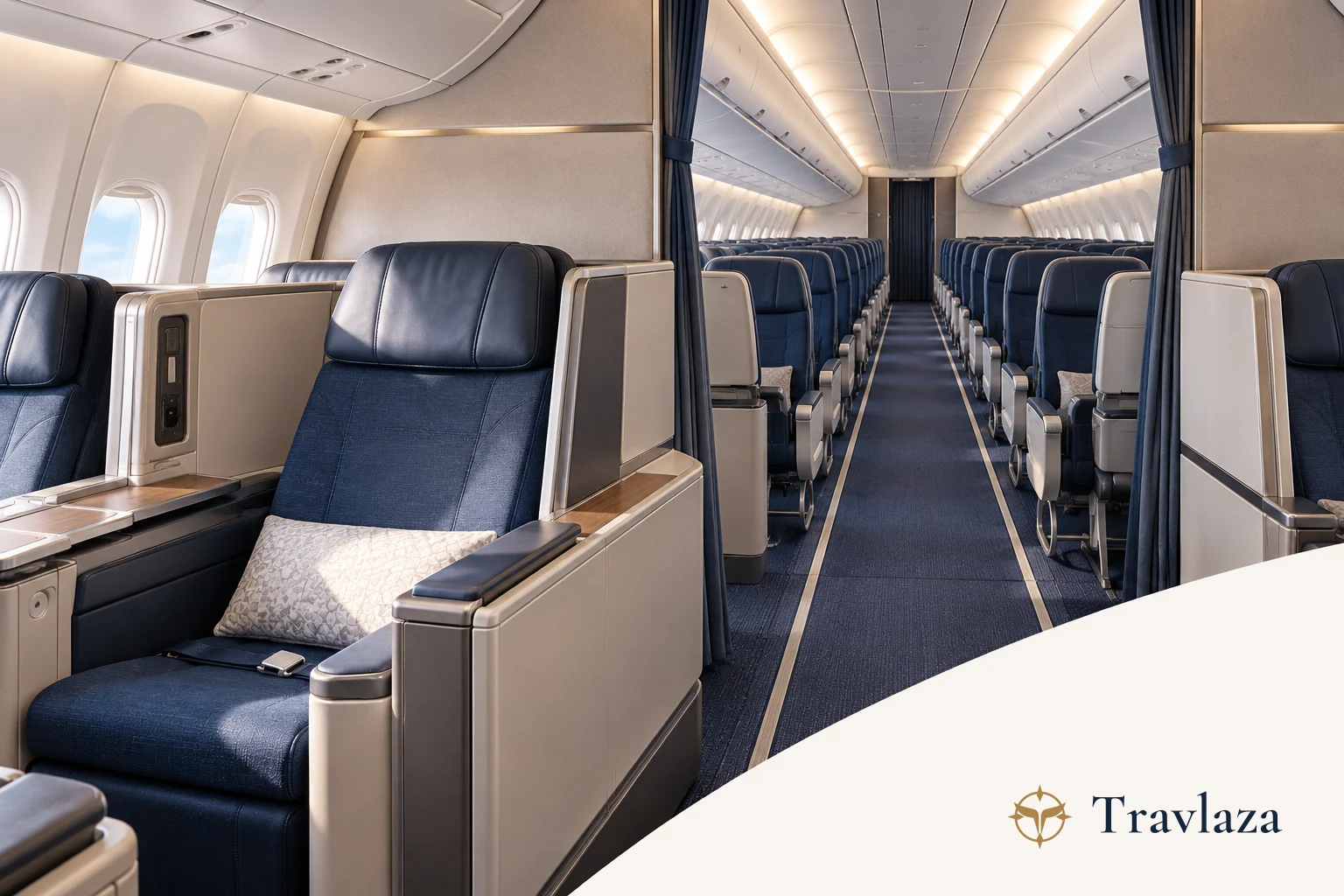
If the airline moves you to a lower cabin than you bought, you may be owed money even if you take the flight. The amount depends on the rules covering that flight. Under EU rules, an eligible downgrade brings a percentage reimbursement for the affected flight; under US Department of Transportation rules, travelling in the lower cabin means a refund of the fare difference. Declining the changed journey is a separate decision with different refund conditions.
Start by saving proof of the cabin you purchased, the cabin you actually received and the particular flight affected. Then tell the airline whether you travelled or declined the change, and request the remedy that matches your route and decision.
Identify the cabin change and the affected flight
An involuntary downgrade means the airline moves you into a lower class of service against your wishes: for example, from business class to economy. A different seat number within the same cabin does not, by itself, establish that you received a lower cabin. Compare the cabin shown on your booking confirmation with the replacement boarding pass and the airline’s written explanation.
Record the flight date, flight number, departure and arrival airports, and operating airline. The operating airline is the carrier responsible for flying the service, which may differ from the airline named most prominently on the booking. Those details help establish which passenger rights apply and where to send the request.
Which part of a connecting ticket should I identify?
Name the individual flight on which the lower cabin was provided. For example, if a hypothetical two-flight business-class journey has only its second flight downgraded, identify that second flight and keep the original itinerary showing both. Under EU downgrade rules, reimbursement concerns the downgraded flight, rather than the entire connecting journey on the ticket.
Before boarding, decide whether you still want to travel
Ask what the airline is offering: the lower cabin on the same flight, another flight, a refund, or credit. If you still need to arrive today, travelling may be the practical choice, but the request afterwards should describe the lower cabin you used. If you want to decline, make that decision clear before travelling and ask for written confirmation of how the booking will be handled.
If time allows, clarify what happens to your connecting and return flights before buying a replacement. Ask which flights remain confirmed and what you need to do to keep them. Save the reply alongside the downgrade notice, so your refund request and your onward travel arrangements do not become confused.
If you decide to look at other departures, Compare flights on Travlaza to see available options. Check the existing booking’s status with the airline or ticket seller before paying for another ticket; a new purchase and a refund request for the original booking are separate transactions.
EU rules: check the route, then the percentage
EU air passenger rights generally cover flights within the EU, whether operated by an EU or non-EU airline; departures from the EU to a non-EU country, on either type of airline; and arrivals in the EU from outside it when operated by an EU airline. The official guidance also requires that you have not already received benefits for flight-related problems on that journey under the relevant law of a non-EU country, such as compensation, re-routing or airline assistance. Tell the airline about any such benefits when asking it to assess your claim.
The official guidance includes specified overseas territories within its EU coverage and says the rules also apply to flights to and from Iceland, Norway and Switzerland. Use the actual airports and operator when checking eligibility, especially for an overseas destination or a trip involving several airlines.
For an eligible downgraded flight, the reimbursement bands are 30% of the ticket price for flights of 1,500 km or less; 50% for flights within the EU over 1,500 km, except flights between the EU and French overseas departments, and for other flights over 1,500 km and up to 3,500 km; and 75% for flights outside those bands, including flights between the EU and French overseas departments. The reimbursement should be paid within seven days.
Apply the band to the affected flight. For a hypothetical eligible flight of 1,200 km, the distance falls in the 30% band. If that flight is one part of a longer connecting ticket, the total distance of the whole trip is not a reason to use a higher band. Ask the airline to explain the ticket-price amount it has attributed to the downgraded flight and show the percentage calculation.
Does an EU downgrade always let me cancel the whole ticket for a refund?
No. The EU downgrade rule described here provides a percentage reimbursement. It does not create a universal right to cancel the whole journey for a full refund merely because the cabin changed. If the journey was also cancelled or otherwise disrupted, ask the airline to assess that separate event and the choices it gives you.
US rules: travelling and declining lead to different refunds
For flights to, from or within the United States, DOT treats an involuntary move to a lower class of service as a significant change. If you decline travel because of that change and do not accept alternative transportation, travel credits, vouchers or other compensation in place of a refund, you are entitled to a refund under the applicable DOT rules. Make clear that you are declining the changed journey and requesting a refund.
If you continue on the flight in the lower cabin, the airline must refund the difference between the original fare and the downgraded fare. You are not entitled to the full airfare back simply because you travelled in a lower cabin. Ask for the fare difference and a written explanation of how it was calculated, rather than applying the EU percentage bands to a US claim.
In a hypothetical business-to-economy change on a US domestic flight, a passenger who takes the economy seat would request the fare difference. A passenger who declines the changed trip and accepts neither alternative travel nor credit would instead pursue the refund for the declined journey. Keep a record of the choice made; the same cabin change can lead to different requests.
Send a request the airline can assess
Keep your original booking confirmation, e-ticket receipt, payment record, original and replacement boarding passes, and the airline’s downgrade messages. If the change was explained verbally, write down when it happened and what you were told, and ask the airline to confirm it. Save the claim reference privately so you can quote it in follow-up messages.
In your request, state the purchased and delivered cabins, affected flight and whether you travelled. Attach the supporting records and identify the remedy you seek: the applicable EU percentage for that flight, the US fare difference after travel, or a qualifying US refund after declining. Request the calculation and keep the airline’s response with your documents. This gives you a clear basis for following up if its offer does not match your case.
More travel guides
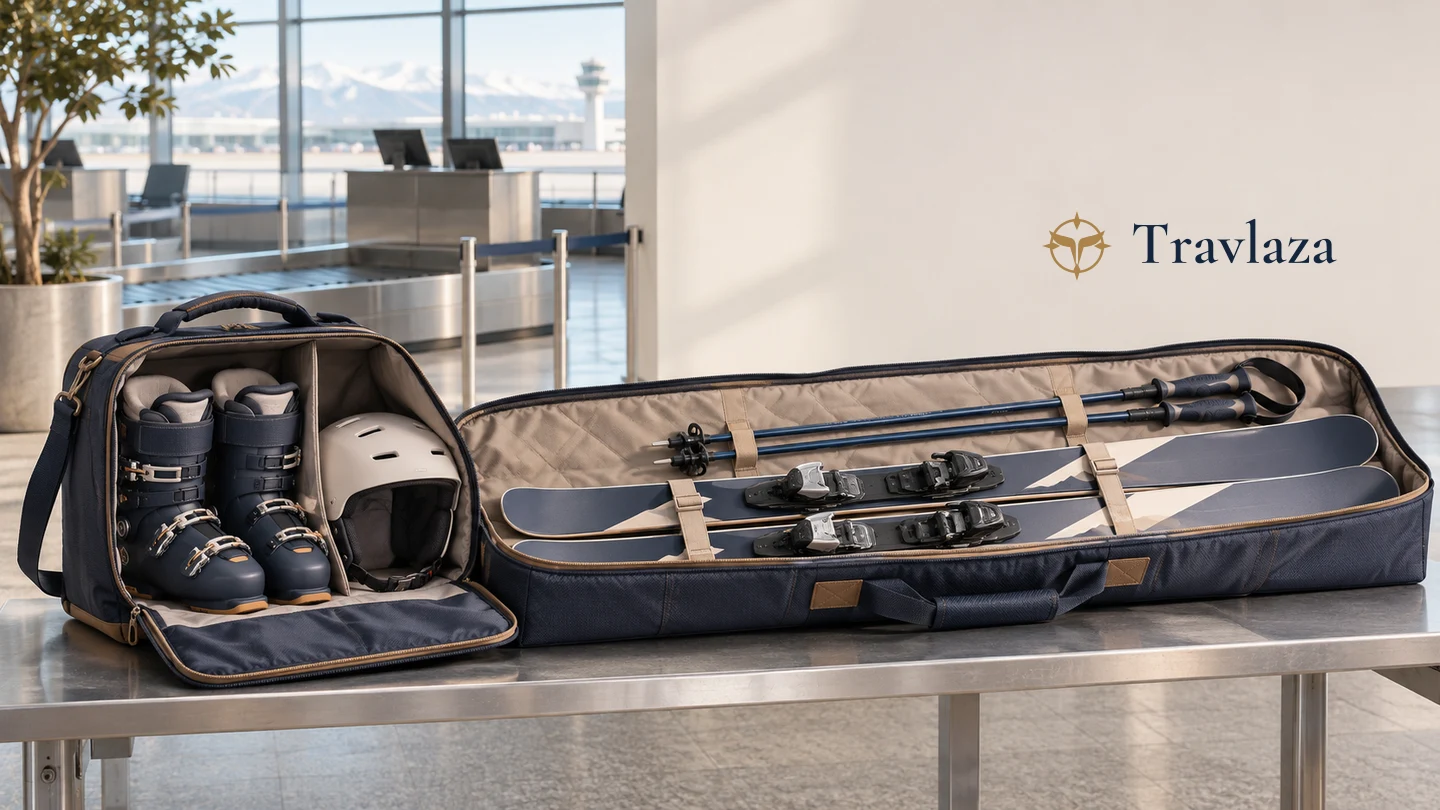
Flying with skis: count the boot bag before booking
A practical way to measure, weigh and price skis or a snowboard together with a boot bag before buying your flights.

Flying with golf clubs: plan your checked bag before booking
Choose a suitable case, weigh the packed golf bag and compare both directions of the journey before paying for a flight.

Flying with fishing rods: carry-on or checked baggage?
Measure the packed rod case, choose cabin or checked carriage, and compare the full baggage cost. Delta and American show how the decision can change.