

Tarmac delays at US airports: what happens if you leave the plane?
Before accepting an exit during a long ground delay, clarify your flight, reboarding and baggage arrangements.
Language
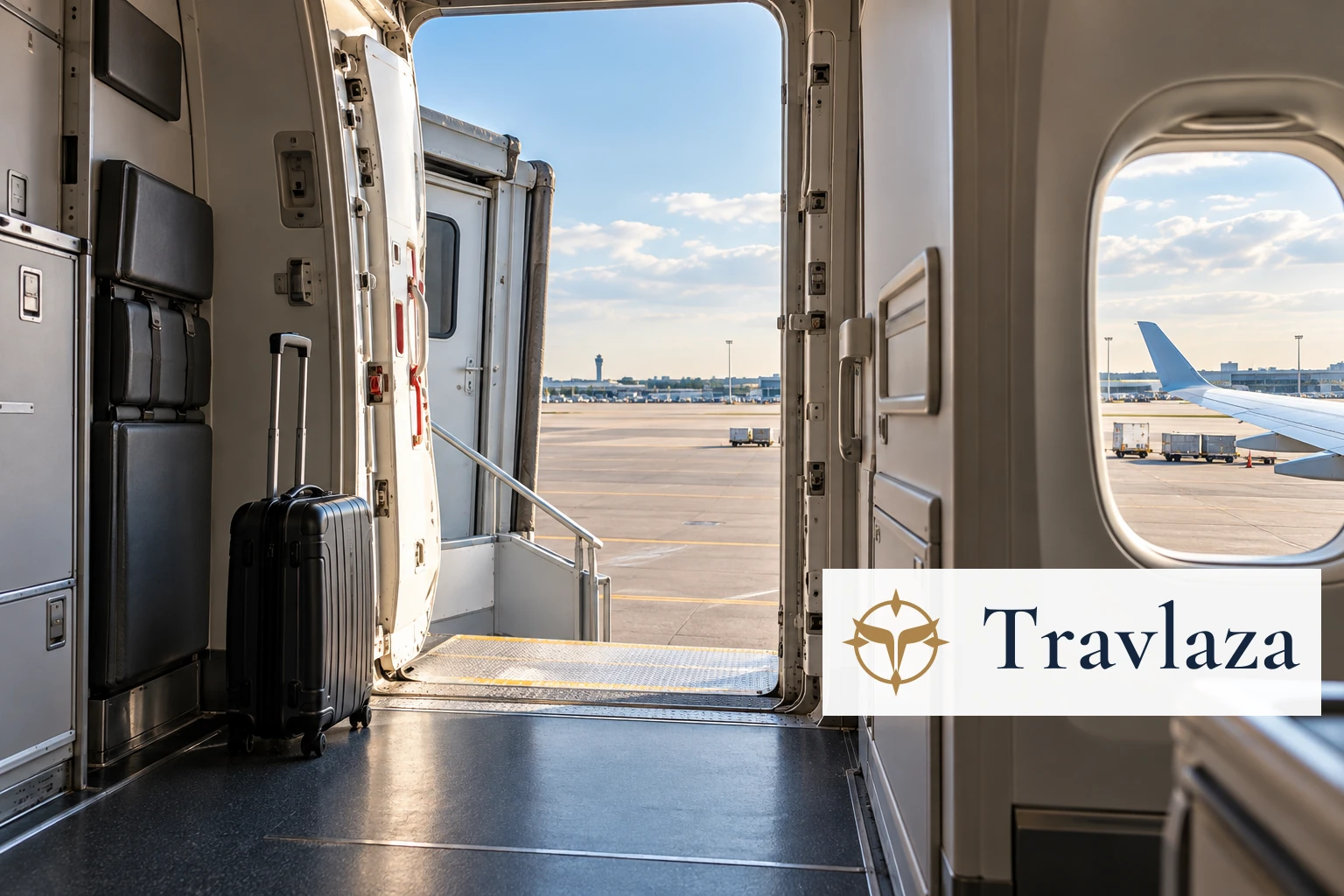
During a long ground delay at a US airport, a covered airline may offer passengers the chance to get off. Before accepting, find out whether you can board again, what happens to your ticket, and how you will recover any checked bags. Choosing to leave does not guarantee another place on that flight. The aircraft may depart without you, and your checked baggage may travel on it. The familiar three-hour and four-hour limits also have different meanings for departing and arriving flights, with safety, security and air traffic control exceptions.
First, identify the delay you are actually in
A tarmac delay means the aircraft is on the ground, waiting to take off or having just landed, and passengers have no opportunity to leave it. Waiting at a departure gate inside the terminal is a different situation. So is a general schedule delay before boarding. A departure board showing a three-hour delay does not, by itself, establish that you have spent three hours in a tarmac delay.
The US Department of Transportation rule applies to tarmac delays at US airports and to covered airlines. A covered airline operates at least one aircraft with 30 or more passenger seats to, from or within the United States. This definition concerns the airline, rather than simply the number of seats on the particular aircraft you boarded. It can include both US and foreign airlines.
Does the US rule apply while my US-bound flight waits at an airport abroad?
No. A flight's US destination does not make a tarmac delay at a foreign airport subject to this US rule. Another country's laws may provide protection there. Identify the airport where the aircraft is waiting before relying on the US time limits, even if the airline or the rest of your journey has a US connection.
What the three-hour and four-hour limits require
For covered flights at US airports, domestic and international flights have different limits. There is also a distinction between starting the return to a place where passengers can safely leave and actually giving passengers that opportunity after arrival. This matters when you hear the crew say that the aircraft is returning to the terminal.
| Situation at a US airport | Domestic flight | International flight |
|---|---|---|
| Departing flight | Begin moving to a location where passengers can safely get off before three hours | Begin moving to a location where passengers can safely get off before four hours |
| Arriving flight | Provide an opportunity to get off safely before three hours | Provide an opportunity to get off safely before four hours |
For example, imagine a domestic departure that begins returning to a safe deplaning location after two hours and fifty minutes of tarmac delay. That movement is relevant to the departure requirement. It does not promise that everyone will already be inside the terminal at the three-hour mark. Equally, a vague announcement about a possible return is not the same event as the aircraft beginning to move there. This is a hypothetical example to explain the distinction, not a finding about a particular flight.
Exceptions are permitted for safety, security or air traffic control reasons. The time limits therefore do not authorize passengers to open a door, leave without instructions or insist on an unsafe exit. Follow the crew's directions. If an explanation is unclear, ask what is happening and when another update is expected; keep a note of the answer rather than trying to settle a disputed timeline while the aircraft is moving.
Before accepting an exit, ask about the next flight
When the airline decides passengers can safely leave, it must notify them promptly that they have that choice. Listen to the full announcement and distinguish an optional exit from instructions for everyone to leave. An offer to step off does not necessarily mean the flight has been cancelled. The airline may still intend to operate it once conditions permit.
If I choose to get off, must the airline let me back on?
No. During a tarmac delay, an airline that offers an exit is not required to let a passenger who accepts it back onto the aircraft. The flight may leave without that passenger, who may have to find another flight. Before choosing, ask whether return to the aircraft is being offered, whether there is a boarding deadline, and what specific arrangement the airline will make for you if you stay in the terminal.
Get the answer for your own booking and travelling party. Useful questions are: ‘Is my seat on this flight still available if I leave?’ and ‘If I cannot return, which flight can you confirm for me, and is there a charge?’ A statement that another service operates later is not a confirmed reservation on it. If only one person in your party wants to leave, explain that clearly so staff can describe the arrangements for each passenger.
Your choice may depend on an urgent personal need, the uncertainty of the wait, or the ability to continue your journey later. There is no single best decision for every passenger. If you need medical attention, tell the cabin crew immediately rather than waiting for an exit offer. For other needs, explain what help you need now and ask what can be provided on board or at the proposed deplaning location.
Your checked bags may continue without you
Cabin baggage and checked baggage need separate plans. If you choose to leave during a tarmac delay and the aircraft eventually departs for its intended destination, the airline may not be required to unload your checked bags before departure. Their presence in the hold does not guarantee that the flight will wait for you, or that they will be handed to you at the aircraft door.
Ask which airport the bags are expected to reach and how the airline will arrange their return or collection later. Keep the baggage tag numbers and save any case reference privately so you can quote it in follow-up messages. If staff cannot yet confirm the bag's location, record the contact channel and the next step they give you. Do not turn an estimated arrival or an unresolved tracing request into a collection appointment in your own plans.
Before you step off, gather the cabin belongings that the crew tells you to take. Think about the documents, phone and essential items you will need if you cannot board again. Follow any specific instructions about baggage and the safe exit route. This preparation is particularly useful when one member of a group carries documents or cabin items for the others: make sure the people leaving can continue independently if necessary.
Help you can request while you are still on board
Covered airlines must provide a snack and drinking water no later than two hours after the start of a tarmac delay. This does not require a full meal. The pilot can withhold food and water service when serving it would be unsafe or create a security problem, such as when cabin crew cannot move safely during aircraft movement. If supplies have not reached your row, tell a flight attendant what you need.
The airline must also provide working toilets, comfortable cabin temperatures and adequate medical attention when needed. Raise a problem directly with the crew so they can respond to your situation. A delay-status notification is required when the tarmac delay exceeds thirty minutes; subsequent updates may be made as the airline considers appropriate. That is different from a universal requirement to make a fresh announcement every thirty minutes.
Keep the existing booking clear before buying a replacement
Once you are in the terminal, establish whether the original flight is still operating and what has been confirmed for your ticket. If you have a connection, show the complete itinerary and ask the airline what it can arrange for the onward journey. Leaving the aircraft is not, on its own, a promise of free rebooking, a refund or compensation. Those questions need a separate answer for the actual flight and booking.
If time allows and you can reach the airline or ticket issuer, clarify the existing booking before paying for another flight. If you need to compare alternatives, you can search flights on Travlaza using the airport and date you can actually depart from. Travlaza compares options; booking and payment take place with the airline or travel agency. A search result does not cancel or change your existing ticket.
Save the flight number, airport, relevant times, announcements you noted, and any messages about leaving or rebooking. Separate what you observed from what you were told: ‘the aircraft started returning at…’ is more useful than an unsupported conclusion that a particular rule was broken. Keep receipts if you incur costs, without assuming the airline has agreed to reimburse them. These records help you explain the sequence when contacting the airline later.
More travel guides
Flying with skis: count the boot bag before booking
A practical way to measure, weigh and price skis or a snowboard together with a boot bag before buying your flights.

Flying with golf clubs: plan your checked bag before booking
Choose a suitable case, weigh the packed golf bag and compare both directions of the journey before paying for a flight.

Flying with fishing rods: carry-on or checked baggage?
Measure the packed rod case, choose cabin or checked carriage, and compare the full baggage cost. Delta and American show how the decision can change.